Production where people live
Around 20 farms inside stores and kitchens, not one central facility. No trucks or central warehouses between farm and shelf.

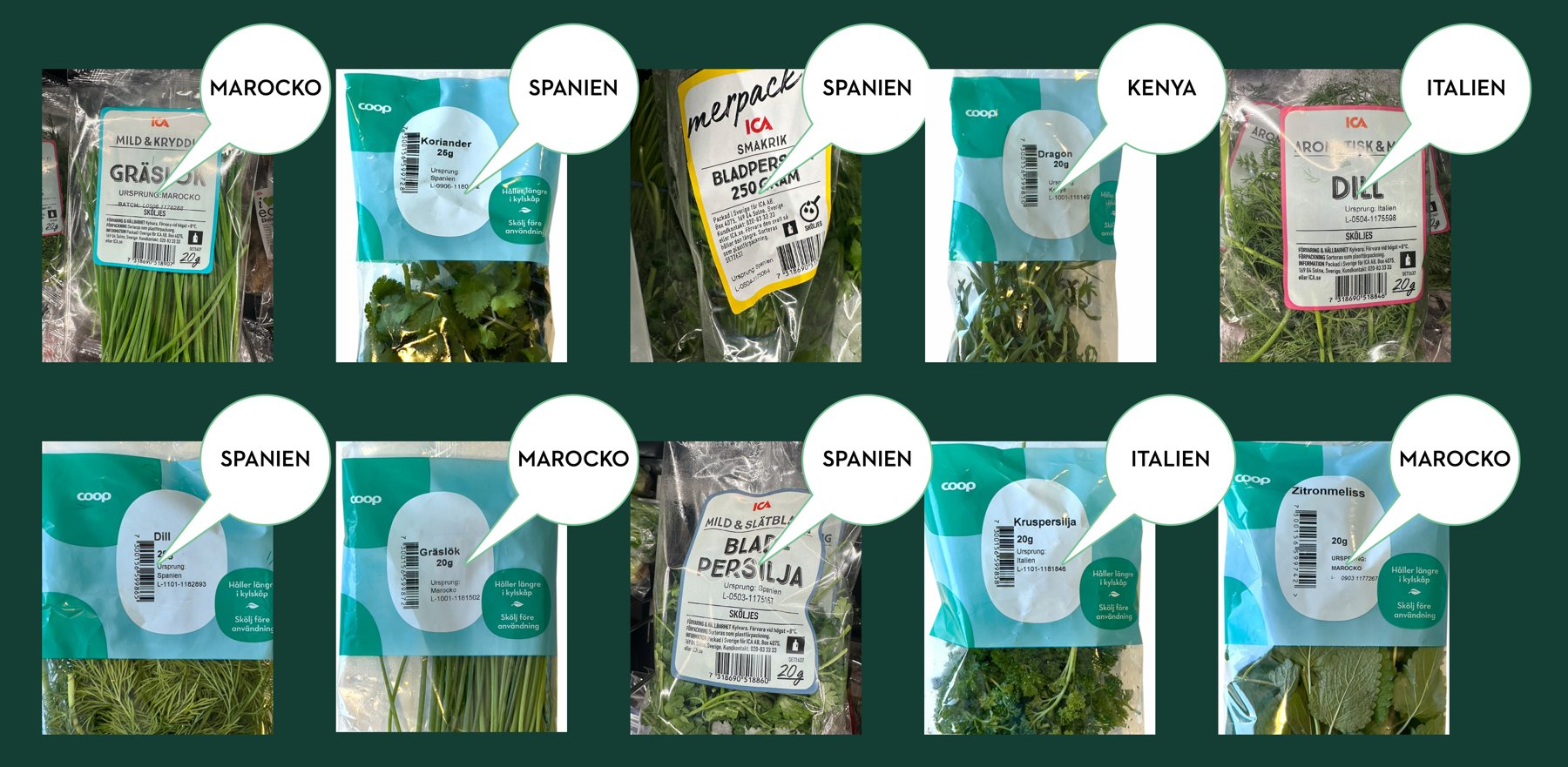
Preparedness planning usually focuses on staples that can be stored, such as grain. Leafy greens cannot be stored, and in northern Europe the growing season is short. For much of the year, supply depends on long refrigerated transport chains from southern Europe and further away.
Sweden consumes about 52,000 tonnes of lettuce a year and imported almost 32,000 tonnes in 2024, two-thirds of it from Spain. When transport is disrupted, fresh greens are among the first products to disappear from the shelves.
Read the report Närodlat 3.0 (Swedish, 39 sources) →Around 20 farms inside stores and kitchens, not one central facility. No trucks or central warehouses between farm and shelf.
Closed, controlled growing: 365 growing days a year, regardless of frost, drought or daylight.
Our farm at Maxi ICA Solna grew about 12 tonnes of greens in 60 m² in 2025 – suited to land-scarce cities.
Water is recirculated in a closed system: up to 99 % less water per kilo than imported field-grown lettuce.
Every farm is monitored and adjusted remotely, so a whole network of farms can be run from one place.
Funded by retail sales under long contracts – resilience that does not rely on public subsidy to keep running.
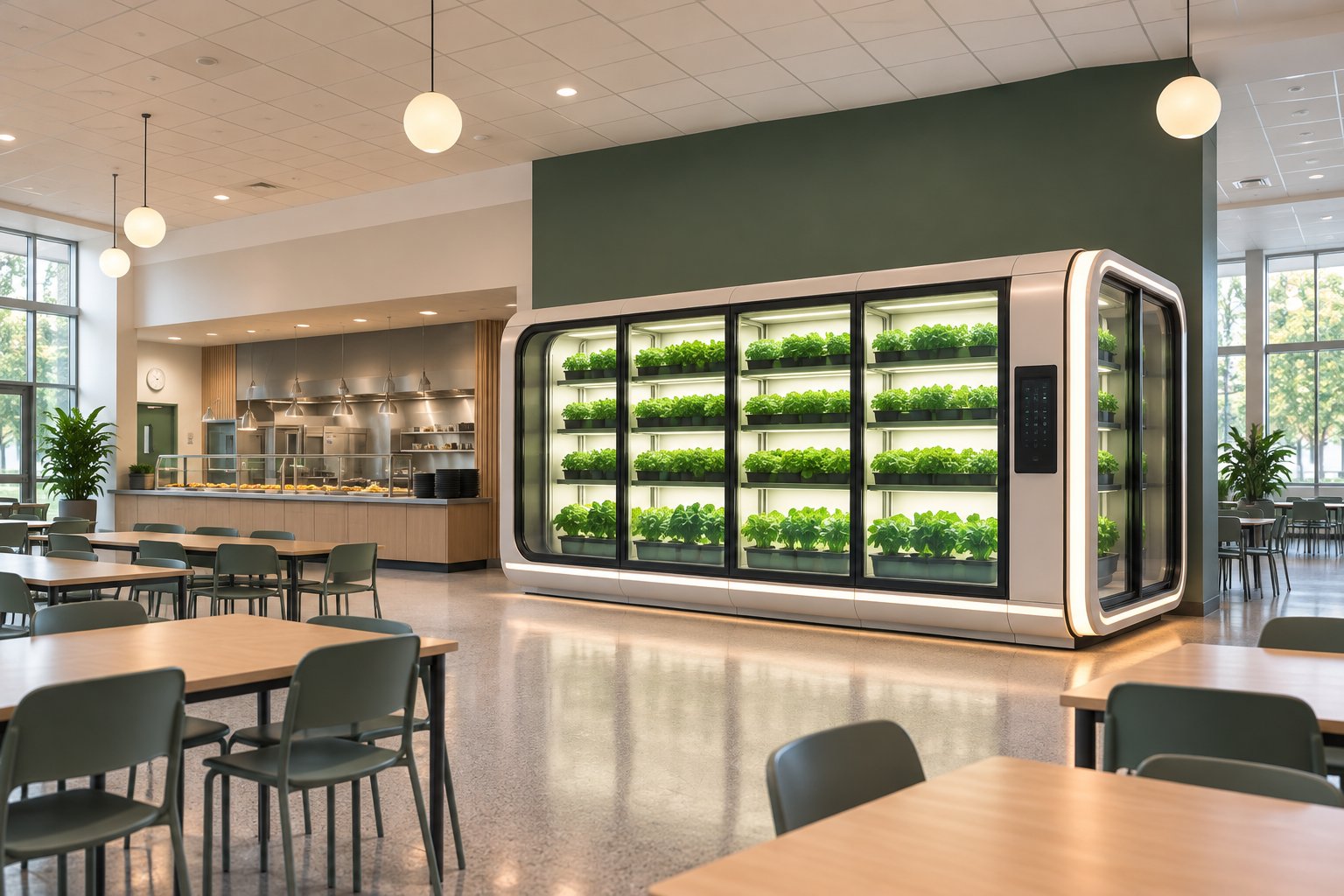
Yes. The same technology works in school kitchens, hospital kitchens and other public catering. Sweden serves about three million public meals a day, and three of four vegetables in them are imported. A farm in the kitchen puts fresh greens on the plate even when transport is disrupted.
For municipalities and schools (Swedish) →No. It complements it – especially in the months when field growing is not possible and imports otherwise take over.
[ANSWER TO CONFIRM: how long crops tolerate an outage, backup options and how the farm restarts.]
1.35 kWh per plant at Maxi ICA Solna in 2025, metered. See measured vertical farming energy use.
Yes. Delegations and agencies are welcome to visit our farms in the Stockholm area.
For government delegations, embassies, agencies and city officials working on food security and urban agriculture.
Request a visit